
 Posted by
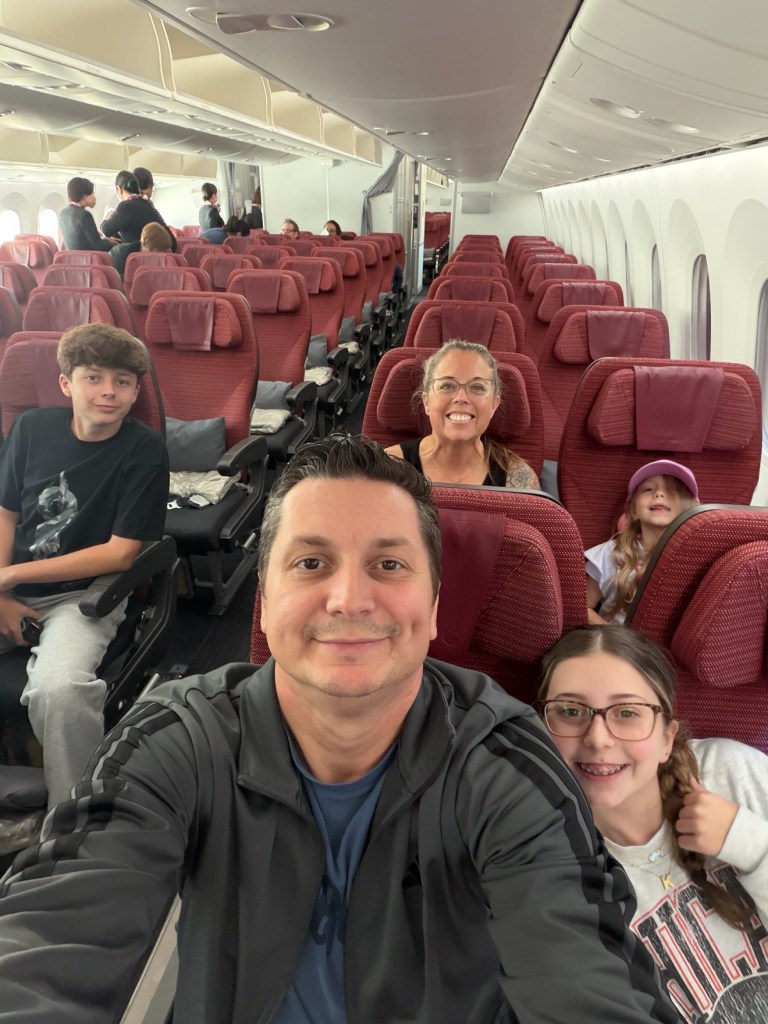
People ask how we do it. Three kids, long-haul flights, and nobody crying in row 22. The answer is not luck. It is a system we built one meltdown at a time.
Our three are well traveled. Japan on spring break. Portugal in the summer. Germany and England the summer before that. Costa Rica, Bali, a Disney cruise. Maddox is 16, Kennedy is 14, Sawyer is 7, and every one of them has a passport with stamps most adults would envy. That did not happen by accident. It happened because we made the travel part of the plan, not the obstacle to it.
Here is the playbook.
Snacks are the real MVP
Pack more than you think you need, then pack a little more. A hungry kid on a plane is a ticking clock, and airplane food arrives on airplane time. We bring a mix: the favorites they would pick themselves, plus one surprise each. Nothing that melts, nothing that smells up the whole cabin, and nothing with enough sugar to launch a small rocket right before boarding. The goal is steady, not hyper.
Comforts from home
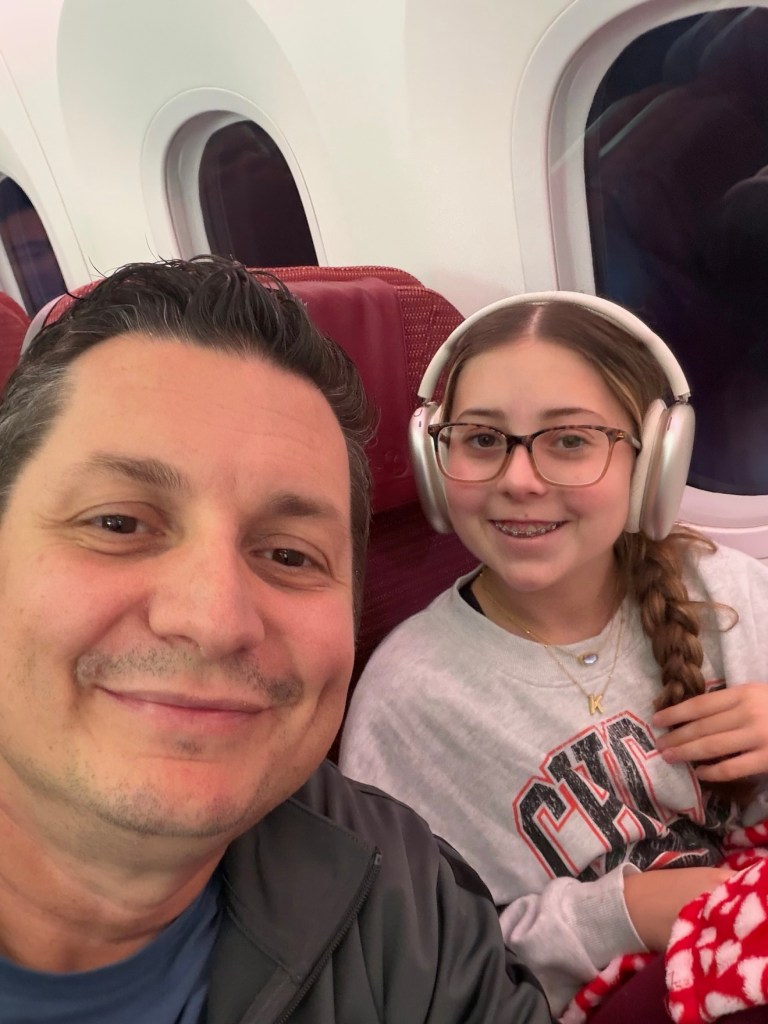
Every kid gets their setup. A blanket that smells like home. Sawyer brings her stuffy, non negotiable. Layers, because airplanes cannot decide on a temperature. Neck pillows for the olders, who will pretend they do not need them and then steal yours. The rule is simple: if it helps you sleep in your own bed, it comes on the plane.
The iPad is a tool, not a babysitter
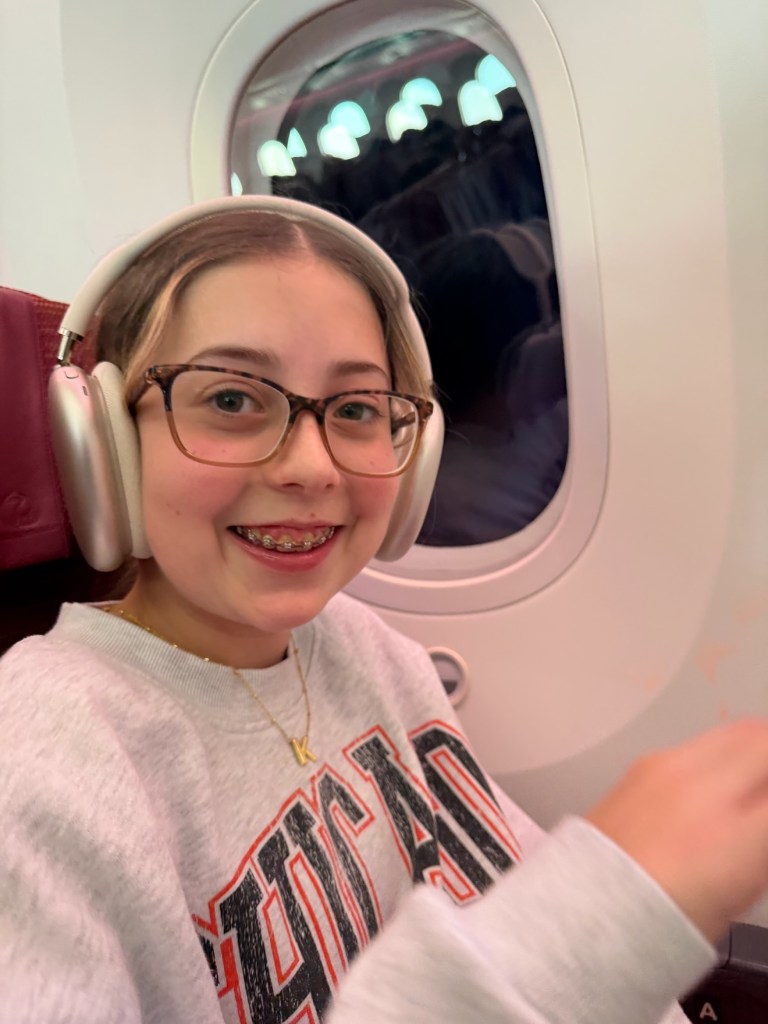
Download everything the night before. Everything. The wifi will betray you at 35,000 feet and you will be glad you planned for it. Headphones that actually fit small heads, a charger in the seatback pocket, and a mix of shows, games, and books so they can rotate when attention runs out. Sawyer gets her shows. The olders get theirs. Nobody negotiates over one screen.
For the olders: the plan has to be part of theirs
This is the big one. Maddox and Kennedy do not want to be dragged through someone else’s itinerary anymore. So we stopped dragging. Each of them picks one stop, one meal, and one thing they want to do on every trip. In Japan, Maddox owned whole stretches of the plan and lit up because of it. Ownership kills complaints. A teenager who chose the ramen spot does not whine at the ramen spot.
It also teaches them how to travel, not just how to be traveled with. They read maps. They check train times. They learn that a plan survives contact with reality only if someone is paying attention. Those are life skills wearing a vacation costume.
The flight is part of the trip
We stopped treating the flight as the price of admission and started treating it as the opening scene. The five carry-ons lined up by the front door. The snacks packed. The iPads charged. By the time we board, the trip has already started, and the kids feel it.
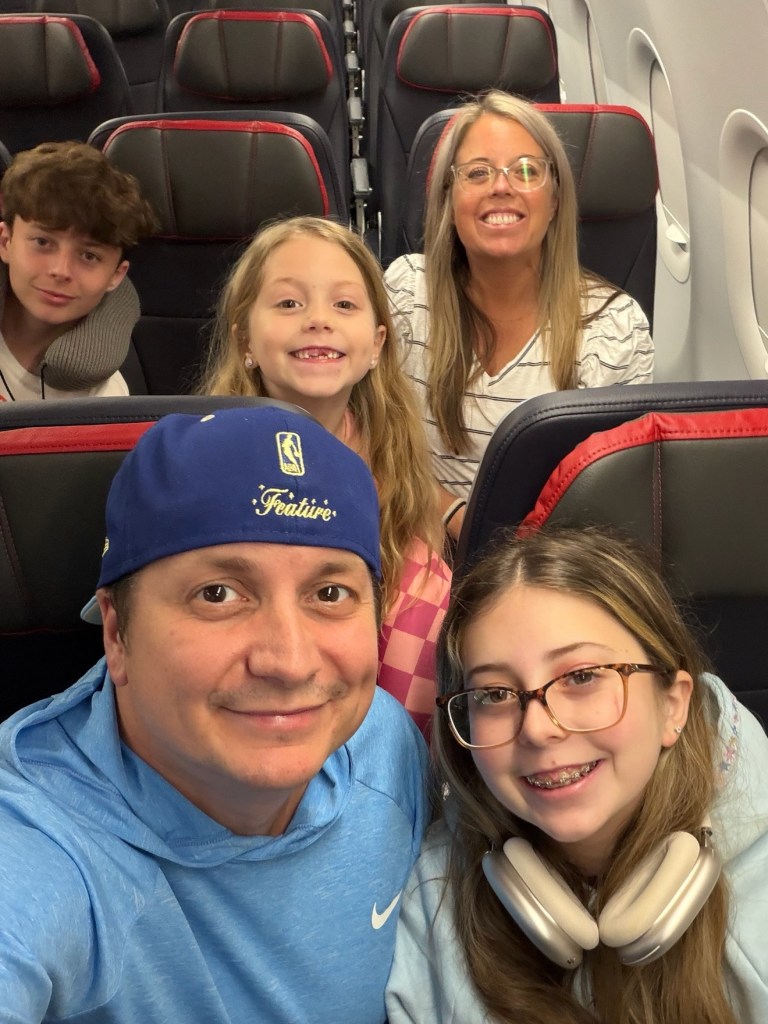
Long flights with kids are not about surviving. They are about arriving with everyone still liking each other. That is the whole game, and we are pretty good at it now.

